
How to Keep Mice From Getting In Under Your Garage Door: 5 Gaps to Close
Mice get in under a garage door through a worn bottom seal, open corners, an uneven floor and gaps along the sides. Here is how to find each gap and close it.
To keep mice from getting in under a garage door, close every gap along the bottom and sides of the door that is wider than about a quarter of an inch, roughly the width of a pencil. In practice that means a bottom seal that is still soft and sits flat on the floor, tight corners where the seal meets the side trim, a floor that has not sunk or heaved away from the door, and weatherstripping on the sides and top that still touches the door. Mice start looking for a warm place once the nights turn cold, and in Metro Detroit that is happening now, so October is the time to check.
Where Mice Get In Around a Garage Door
- A worn or chewed bottom seal. The rubber seal on the bottom of the door flattens, cracks and hardens after a few Michigan winters, and it stops filling the low spots in the floor. Mice also chew the ends of a soft seal to widen a gap that is already there.
- The two bottom corners. The most common way in is where the bottom seal meets the side trim. If the seal was cut short, or the bottom of the trim has rotted or been gnawed, there is a mouse-sized opening even when the rest of the door sits tight.
- An uneven or sunken floor. Freeze and thaw cycles lift and settle concrete, and road salt pits the surface where the door lands. A door can close fully and still show daylight across part of the opening.
- Side and top weatherstripping. The vinyl strips on the frame should press lightly against the face of the door. When they shrink, curl or pull away from the frame, they leave a gap that can run the full height of the door.
- A door that does not close square. Worn rollers, a bent track or a stretched cable can leave one side of the door sitting higher than the other. No seal fixes that. The door itself has to be adjusted.
Replacing the bottom seal before it freezes to the floor is also a step in our winter garage door maintenance checklist, which covers the rest of the cold-season checks.
Why It Happens in October in Metro Detroit
WDIV Local 4 forecast overnight lows in the mid-40s for Detroit and near 38 degrees in Lapeer for the night of October 2, and colder nights follow from here. Orkin, the pest control company, says rodents typically move into buildings between October and February as they look for shelter from the cold, food and water.
A garage is the easy first stop. It is attached to the house, it is a few degrees warmer than outside, and it usually holds something to eat, such as bird seed, grass seed or pet food. From the garage, a mouse needs only one more gap, around the door into the house or around a pipe, to be inside the walls.
A seal problem is often a door problem. If the door is out of balance or one cable has stretched, the door lands unevenly and the gap comes back however new the rubber is. That is something we correct during a garage door maintenance visit, along with the rollers, hinges and springs.
Mice also damage the door system itself. They chew the thin low-voltage wires that run to the safety sensors and the wall button, and a door that suddenly will not close can be the first sign of them. Our garage door safety sensor guide explains how to read the sensor lights.
How to Find and Close the Gaps
You can do most of this yourself in a few minutes. Leave the springs, the cables and the bottom brackets they attach to alone, because they are under high tension.
- Do the daylight test. On a bright day, close the door, switch off the garage lights and look along the bottom and sides from inside. Anywhere you see light is a place a mouse can use.
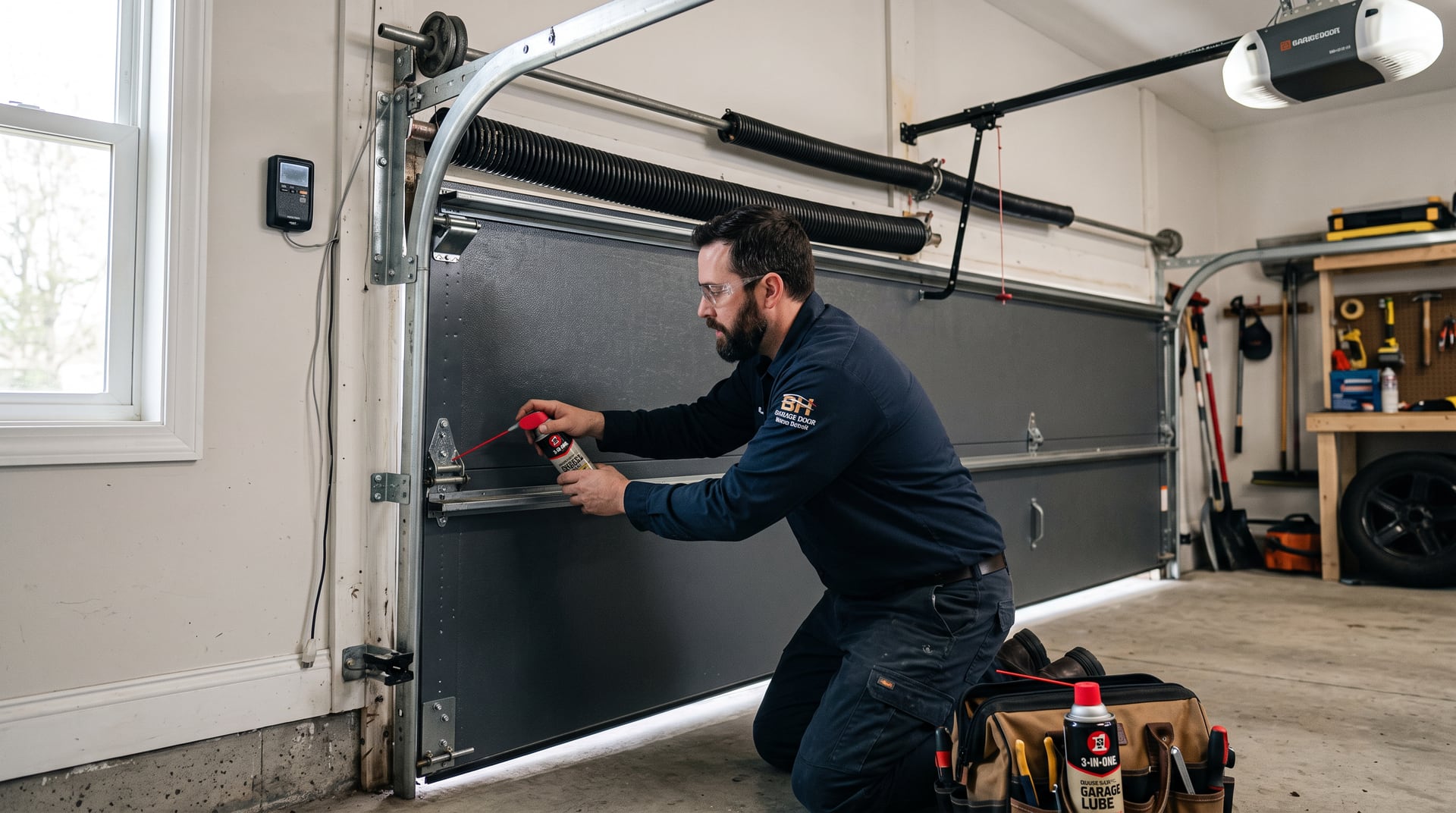
- Check the bottom seal. It should be soft and continuous from one end of the door to the other. If it is flat, cracked, brittle or chewed it needs replacing, and the new seal has to match the retainer on your door.
- Look at both corners. Check for gnawed rubber, soft wood and droppings. Small holes in the frame can be packed with steel wool or copper mesh and sealed over, which mice do not chew through easily.
- Press on the side strips. The weatherstripping on the sides and top should touch the door along its whole length. Replace strips that have curled away or gone hard.
- Move the food. Keep bird seed, grass seed and pet food in metal or thick plastic containers with lids, and get cardboard boxes off the floor.
A rubber threshold strip fixed to the floor can close a gap left by an uneven slab, but it will not help if the door itself is closing crooked. If you already have mice, sealing the door keeps new ones out, and a pest control company deals with the ones inside.
When to Call Us
Call us at (313) 236-4558 if you can see daylight under one side of the closed door, if the bottom seal is torn or missing, or if the door comes down unevenly. We replace bottom seals and side weatherstripping, adjust the door so it closes square on the floor, and check the rollers, cables and spring balance while we are there, for homes across Metro Detroit including Troy, Royal Oak, Warren, Southfield and Livonia. What it costs depends on the size of the door, the type of seal and retainer and whether the door needs adjusting, so call for a price on your job. We are open Sunday through Thursday from 9:00 AM to 5:00 PM and Friday from 9:00 AM to 12:00 PM, and you can also reach us with the Contact Us button below.
Daylight under your garage door?
We are open Sunday through Thursday 9:00 AM to 5:00 PM and Friday 9:00 AM to 12:00 PM. Use the buttons below to reach us.


